RECYCLING MONOBLOC
This six week workshop was held at Schlesische 27 Berlin in 2025. Through hands-on experimenation we explored the challenges of possibilities of plastic recycling – exchanging perspectives on global and material dimensions of industrial product cultures.
Using this ubiquitous plastic chair "Monobloc" as a starting point, the workshop combined hands-on experimentation with creative reflection, connecting participants to both artistic techniques and broader discussions about production, consumption, and material culture.
The Monobloc chair, found everywhere in the world, represents industrially produced furniture: affordable, uniform, and made from plastic, a material closely linked to the oil industry. Despite its accessibility, it is often undervalued and discarded, accumulating in landscapes and environments, particularly in countries with limited recycling infrastructure.
In the workshop, participants worked with broken Monobloc chairs, disassembling and transforming them into new artistic forms. Through this process, they engaged directly with polypropylene, learning to melt, deform, and reshape it into inventive structures.


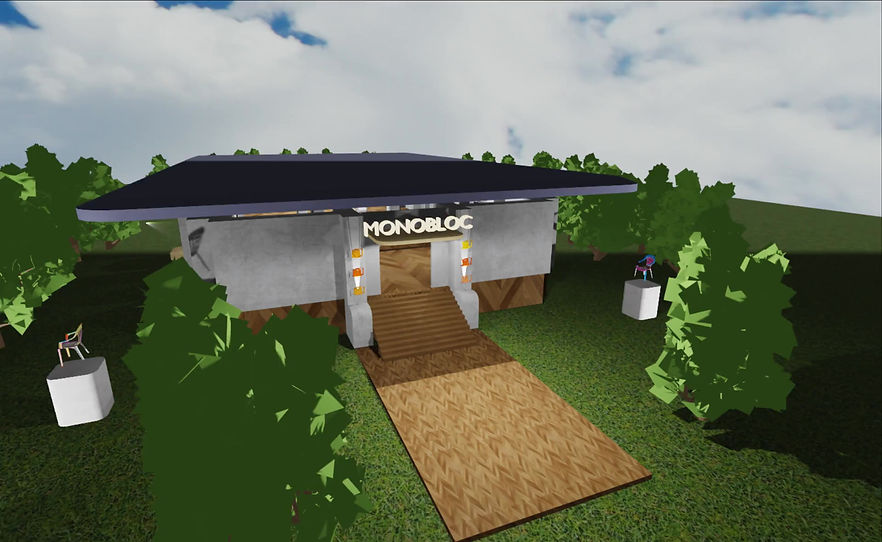
Tying and weaving techniques were incorporated to assemble the fragmented pieces, drawing on patterns and traditions that some participants brought from their own cultures. These material explorations were then translated into a digital space: participants 3D-scanned their works and used Blender to map the patterns onto virtual Monobloc chairs, creating a shared virtual exhibition. The workshop thus bridged physical craftsmanship and digital experimentation, opening conversations about globalized product cultures, plastic consumption, and the creative potential of rethinking everyday objects.
The outcomes were presented in an internal exhibition at Schlesische 27, a space combining arts and education for newly arrived young people in Germany, where participants displayed their transformed Monoblocs alongside the stories and reflections developed throughout the workshop. The project offered not only practical experience with diverse manufacturing and artistic techniques but also a platform for dialogue, cultural exchange, and critical engagement with the environmental and social dimensions of widely circulated industrial objects.